Retrofitting of fishing fleets with low payback time and easy to deploy solutions for footprint and GHG emissions reduction.
01. What we do
Refest Project
REFEST is a 3-years project, structured in 8 Work Packages, managed by a Consortium of 14 Partners from 10 Countries.
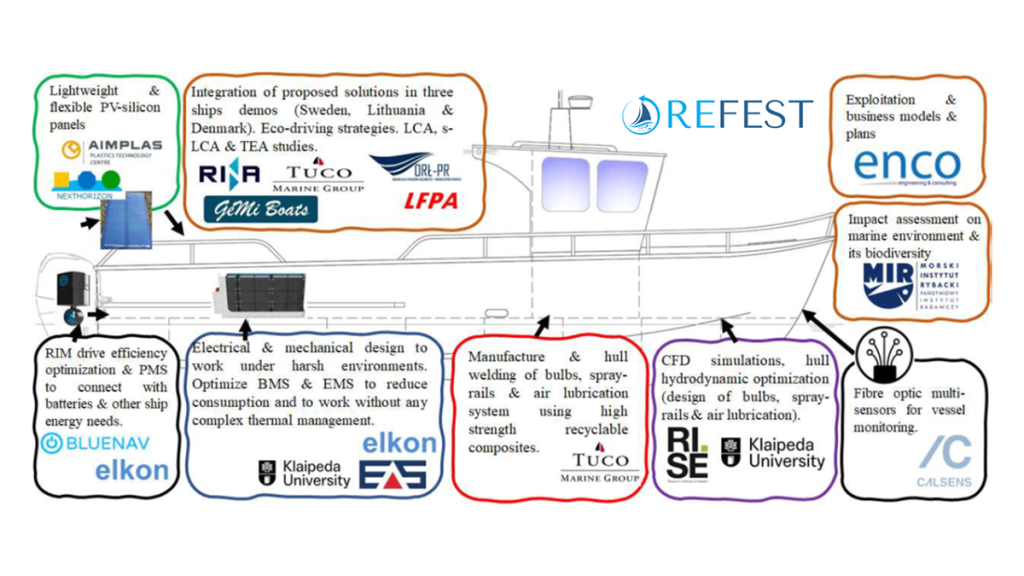
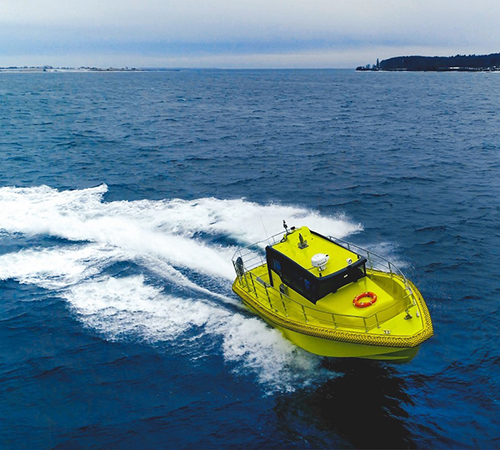
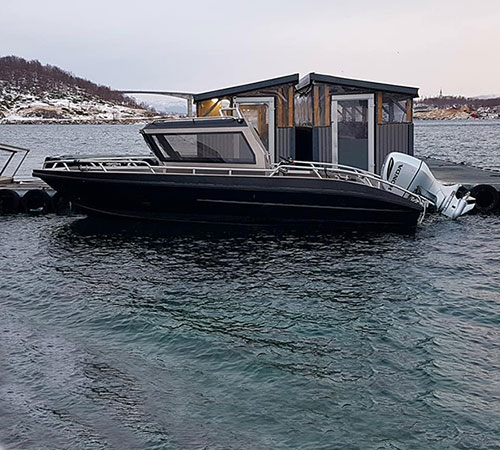
It is focused on the most promising scalable technologies, easy-to-deploy and suitable to be installed in a broad range of traditional fishing ships to provide hydrodynamics, electrical power management, alternative propellers, solar electricity generation and propulsion (batteries), sensoring and digitalization, hull appendages and air lubrication.
REFEST aims to achieve procedures and technologies to secure the reduction of fuel consumption and GHG emissions up to 40% reduction compared to the original design.
The solutions proposed will be designed to ready to deploy in a broad range of small fishing vessels. Ensuring upscaling of the proposed solutions after project implementation till 2029.
REFEST aims to ensure that presented solutions and technologies are suitable, acceptable, and economically viable for the end-users by including fishing communities, researchers, but also, they have not a negative effect over the north and Baltic Sea environment by application of analytical and modelling methods for impact assessment on marine environment and biodiversity.
03. REFEST strategy
EU Mission: REFEST Strategy
The initial GHG strategy envisages a reduction in carbon intensity of international shipping, to reduce CO2 emissions per transport work by at least 40% by 2030 and total annual GHG emissions from international shipping should be reduced by at least 50% by 2050. Unlike technologies that require costly replacement of equipment or integration of new units, which is not always possible on ships older than 10-15 years, there are many technological solutions to fuel savings and GHG reduction in fisheries.
Vessel:
Technologies to improve vessel structure and onboard equipment such as hull and propeller improvements, improved propulsion and auxiliary engines, improved fuel performance, LED lighting, alternative refrigerants, and assisted fishing.
Strategy:
Strategies to improve fishing in operation, such as route optimization, onboard fuel control and monitoring, and slow steaming.
Gear:
Fishing gear technologies to reduce fuel consumption, such as new netting and gear designs that reduce drag and fishing gears that improve catch efficiency.
Regulatory and management measures:
Measures that improve energy efficiency by regulatory or management means.